Conferences, round tables, reports, guides, resolutions and training: what the National Bar Council, the Conférence des bâtonniers, the bars, lawyers’ associations, Europe and the State are doing for the modernisation and digital sovereignty of the legal profession, artificial intelligence and the cybersecurity of law firms. Each action links to its organiser’s own page.
Filter the actions
Organisations
Themes
All 44 actions shown
No action matches both filters at once. Choose “All” on one of the two rows.
Upcoming events
TrainingToday
Artificial intelligence in legal practice in Quebec and France
National Bar Council (CNB)
Paris (CNB auditorium)
The National Bar Council will present to lawyers and representatives of bars from around the world the tools and methods developed in Quebec and in France to bring artificial intelligence into legal practice. Each participant will leave with a concrete approach to framing these uses in their own organisation, along with examples of good practice.
CNB general assembly vote on secure email addresses
National Bar Council (CNB)
The general assembly of the National Bar Council is due to vote on the final report on the obligation for every lawyer to have a secure email address. The comments gathered during the consultation of the bars, professional unions and technical bodies are to feed into the debate.
Opening of “Mon espace Justice” for online procedures
French Ministry of Justice
From 9 December 2026, the portal for court users will become “Mon espace Justice”. Anyone will be able to file online the vast majority of civil applications that do not require a lawyer, receive the decisions in their civil case and follow certain stages of their criminal proceedings, eventually some 630,000 applications a year.
Client relations and the challenge of artificial intelligence
Marseille Bar
Marseille (Bar library and videoconference)
The digital committee of the Marseille Bar will bring lawyers together on client relations and the challenge of artificial intelligence. The session continues a 2026-2027 programme ranging from comparing AI tools for everyday use in law firms to the ethics of digital practices, by way of cybersecurity.
The Paris Bar’s AI Academy is part of the Bar’s digital strategy “Vers un barreau souverain”: it is to help lawyers take ownership of artificial intelligence tools, master their uses and integrate them into their practice, in line with the requirements of the profession. The programme includes a launch conference on 4 November followed by beginners’ workshops until 10 December.
Lyon Bar 2026 action plan for artificial intelligence
Lyon Bar
At a dedicated event, the Lyon Bar presented its 2026 action plan for artificial intelligence: after a period of acclimatisation, the time has come to integrate it into law firms. Driven by its Legaltech and AI committee, sixteen AI coffee mornings are scheduled from March to December to support lawyers through this transition.
From the most recent to the oldest, since February 2025.
Training
Digitalisation of criminal justice and the rights of the defence
National Bar Council (CNB) · European Lawyers Foundation
Paris (CNB headquarters)
As part of the European TRAVAR project, the National Bar Council and the European Lawyers Foundation will offer a practical day on the digitalisation of criminal justice. The European arrest warrant, videoconferencing, paperless proceedings and the integrity of digital evidence will be examined from the standpoint of the rights of the defence, with full interpretation in French and English.
53rd congress of the French Lawyers’ Union in Évry-Courcouronnes
French Lawyers’ Union (SAF)
Évry-Courcouronnes (University of Évry)
The French Lawyers’ Union will hold its 53rd congress at the University of Évry, aiming for everyone to leave with practical reflexes and an action plan for the year. Among its workstreams, participants will learn to anticipate and prevent the misuse of artificial intelligence in public administrations and courts, and to protect their case files.
Cybersecurity workshop of the Marseille Bar digital committee
Marseille Bar
Marseille (Bar library and videoconference)
The digital committee of the Marseille Bar will devote its November session to a cybersecurity workshop, one of the issues it follows for law firms. The session is open to all members of the bar; it will take place from noon to 2 pm in the Bar library and will be broadcast by videoconference.
The National Bar Council announced two round tables bringing together the views of the profession, students, universities and artificial intelligence players. The first was to take stock of the changes already under way in law firms, the second to explore ways of adapting the training of future lawyers to AI-related skills.
Launch of AVOCAT+, a legal artificial intelligence platform
National Bar Council (CNB)
The National Bar Council has launched AVOCAT+, its legal artificial intelligence platform designed for the uses and requirements of the profession. From day one it offers ten assistants specialised in French law; every lawyer can create others and share them with colleagues. The models run on infrastructure hosted in France, and documents uploaded by lawyers are not used to train them.
CEPEJ meeting on cyberjustice and artificial intelligence
CEPEJ (Council of Europe)
Strasbourg
At its fifteenth meeting, the CEPEJ working group on cyberjustice and AI examined AI-generated deepfakes in electronic evidence, the subject of guidelines in preparation. It also discussed the automation of judicial proceedings and the safeguards that preserve the human dimension of justice. Automated justice will be the theme of the European Cyberjustice Network meeting on 2 December in Strasbourg.
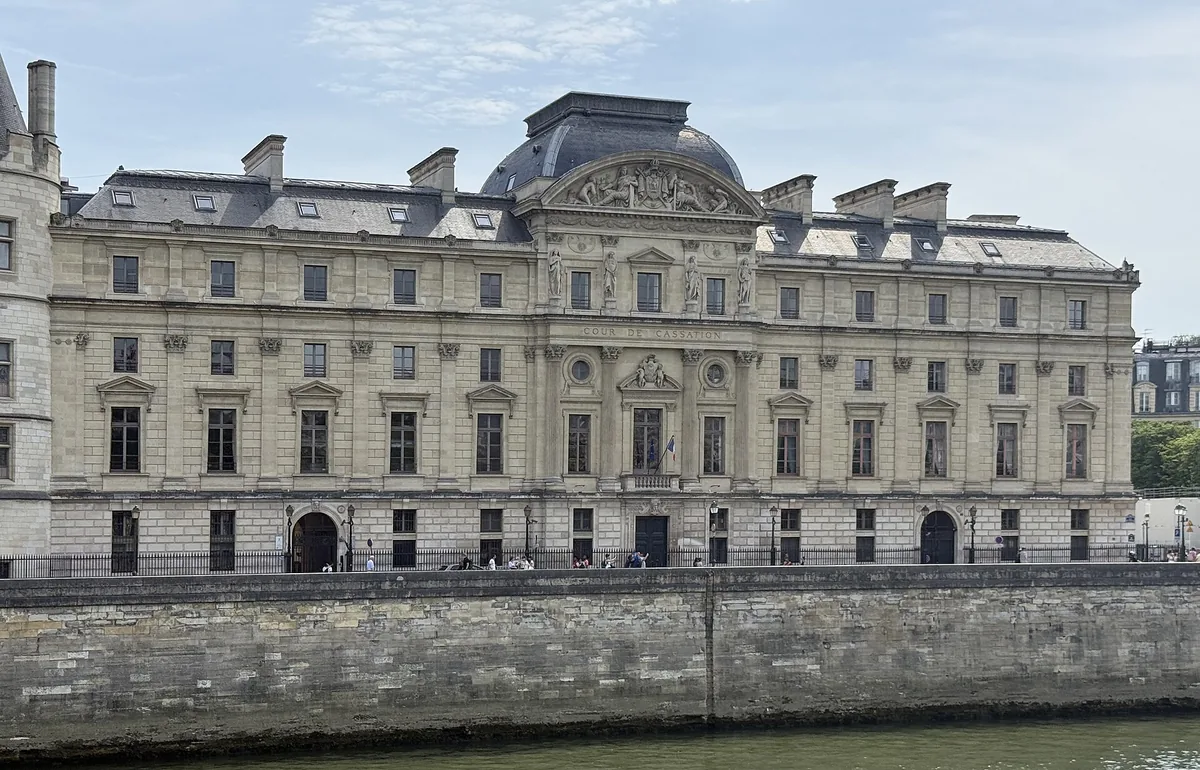
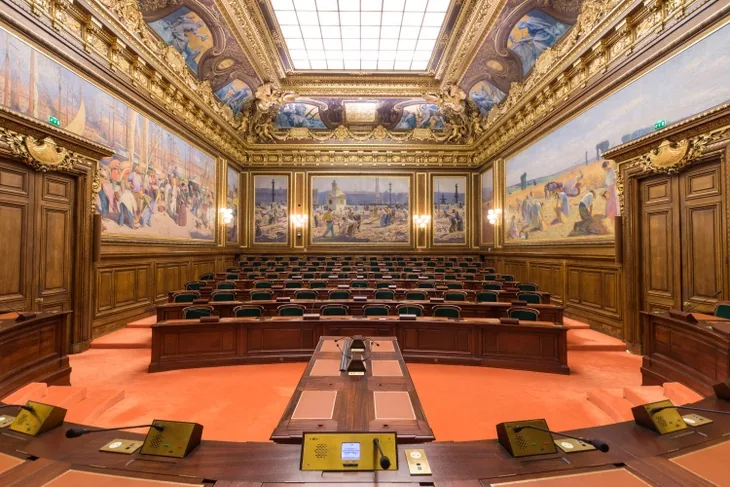
Ethics charter on artificial intelligence of the Court of Cassation
Court of Cassation
The Court of Cassation adopted an ethics charter for the use of artificial intelligence systems by its judges, officials and contract staff. AI is confined to support tasks, all output must be checked and training in the tools is encouraged. The Court will evaluate the tools and review its charter at least every two years.
Nine years after the previous edition, the programme of the national convention of French lawyers set out three days of debates, training sessions and workshops. Artificial intelligence featured in several workshops, from international practice to the cyber protection of law firms, by way of ethics, the training of lawyers and the defence of the scope of legal practice.
CNB consultation on mandatory secure email addresses
National Bar Council (CNB)
The National Bar Council submitted to the bars, professional unions and technical bodies a draft decision that would require every lawyer to have and use a secure email address in their professional activity. Prepared by its Digital committee and its Rules and practice committee, the text aims to strengthen professional secrecy, the security of digital exchanges and the profession’s control over its data. Comments are expected before 13 November 2026.
The Minister of Justice brought together heads of courts in Paris to roll out the “digital shock” everywhere. Four workstreams drive this modernisation: paperless proceedings, sovereign and secure artificial intelligence, the new “Mon espace Justice” portal and new digital tools in the courts.
General application of the EU regulation on artificial intelligence
European Union
The European regulation on artificial intelligence became applicable as a whole, with a few exceptions, together with its transparency rules. The AI Office and the authorities of the Member States are now responsible for its implementation, supervision and enforcement. The obligations for high-risk systems, including those used to prepare court decisions, will apply from 2 December 2027.
Charter for the use of artificial intelligence in Paris law firms
Paris Bar
The Council of the Paris Bar adopted a charter on the use of artificial intelligence for law firms, the second part of its digital strategy. Members of the Council drafted it with both technical and ethical rigour. It offers a set of good practices that each firm can freely adapt to its organisation and digital maturity.
General assembly of the Conférence des bâtonniers in Strasbourg
Conférence des bâtonniers
Strasbourg
At its general assembly in Strasbourg, the Conférence des bâtonniers unanimously adopted a motion on the deployment of Portalis, “a tool for the modernisation of civil procedure”. The motion calls for an interconnection between Portalis and e-Barreau, ensuring fluid and unified access to case files. The next day, the assembly examined several topics linked to the digital transformation of the profession, including electronic invoicing and GDPR compliance by the bars.
The Paris Bar digital strategy “Vers un barreau souverain”
Paris Bar
Paris
The Council of the Paris Bar adopted the strategic report “Vers un barreau souverain”, the first comprehensive digital strategy put forward by a French bar, focused on cybersecurity, artificial intelligence and the protection of professional secrecy. It provides in particular for an audit of the Bar’s technological dependencies, stronger cybersecurity standards, a compliance plan for Paris law firms and an artificial intelligence dedicated to professional ethics, developed within the Bar.
FNUJA motion for digital governance of the profession
National Federation of Young Lawyers’ Unions (FNUJA)
Grenoble
At its Grenoble congress, FNUJA proposed that the National Bar Council adopt a public reference framework, “Numérique souverain des avocats”, setting minimum requirements, notably on professional secrecy, hosting and security, as the basis of any relationship between a lawyer and a digital provider. The motion also calls for an observatory to assess the digital tools on the market against public criteria.
Roll-out of the generative AI assistant “Mon Assistant Justice”
French Ministry of Justice
The Ministry of Justice took a step forward in its modernisation by opening “Mon Assistant Justice”, an internal generative AI tool for drafting, summarising, translating and brainstorming, to several thousand staff. The tool is hosted in France within a secure framework, after several months of trials with 2,500 staff.
“AvocIA” conference on the lawyer in the age of artificial intelligence
University of Strasbourg · AFDT
Strasbourg (Alain Beretz lecture theatre)
The social law team of the DRES research unit at the University of Strasbourg and the AFDT organised a conference around a frank question: what kind of lawyer in the age of artificial intelligence? The programme announced two speakers, including a social law practitioner, followed by a discussion with two Strasbourg lawyers on the future of the profession.
Training session for bar council members in Nouméa
Conférence des bâtonniers
Nouméa
The Conférence des bâtonniers brought together elected bar council members in Nouméa for two days of training. The programme devoted a session to artificial intelligence and lawyers’ liability, then covered digital technology and cybersecurity among the new risks of the profession.
Council of Bars and Law Societies of Europe (CCBE)
The Council of Bars and Law Societies of Europe published a roadmap on innovation in legal services, together with a technical guide on the use of AI tools and models by lawyers. The roadmap maps out the challenges, opportunities and obstacles of modernisation, from adopting new tools to digital infrastructure.
CNB guide to professional ethics and artificial intelligence
National Bar Council (CNB)
The National Bar Council has adopted a comprehensive guide on the use of generative artificial intelligence in law firms. It sets out what these tools make possible, then recalls the profession’s requirements: professional secrecy, data protection, competence, prudence and independence. Designed for practice, it brings together concrete recommendations and recent case law.
Towards a CNB partnership with the Legal Data Space
National Bar Council (CNB)
The general assembly of the National Bar Council adopted a report presenting its partnership with the Legal Data Space, the first European data space for legal data, with which it has been involved since November 2024. It mandated its executive board, its forward planning and innovation committee and its artificial intelligence working group to continue discussions towards a conversational agent for lawyers, financial terms included.
The National Bar Council and the Legal Data Space invited lawyers to an evening devoted to co-designing legal artificial intelligence agents, imagined by lawyers and for them. The meeting aimed to open a concrete dialogue on the method, use cases and ethics of these hybrid tools, between lawyer and machine.
Proposed definition of legal advice in the face of generative AI
National Bar Council (CNB)
On a report from its committee on the practice of law, the general assembly of the National Bar Council removed the word “intellectual” from its proposed definition of legal advice. Centred on the purpose of the service, the proposal aims to protect the public from generative artificial intelligence tools able to produce personalised advice; the CNB is asking for it to be written into law.
Charter on the use of artificial intelligence in the administrative courts
Council of State
The Council of State made public a charter setting a framework for the use of artificial intelligence in line with the ethics of the administrative courts. It results from wide consultation with staff, trade unions and elected representatives. Its publication allows court users and citizens alike to know its rules, in full transparency.
AI programme directorate at the French Ministry of Justice
French Ministry of Justice
The French Ministry of Justice created within its general secretariat a programme directorate dedicated to artificial intelligence, to speed up work begun in 2024 to modernise the public justice service. It will develop use cases for staff and court users, with legal, technical and ethical safeguards for projects. A first trial of an AI assistant for staff and judges had just been launched.
European DigitalJustice@2030 strategy for digital justice
European Commission
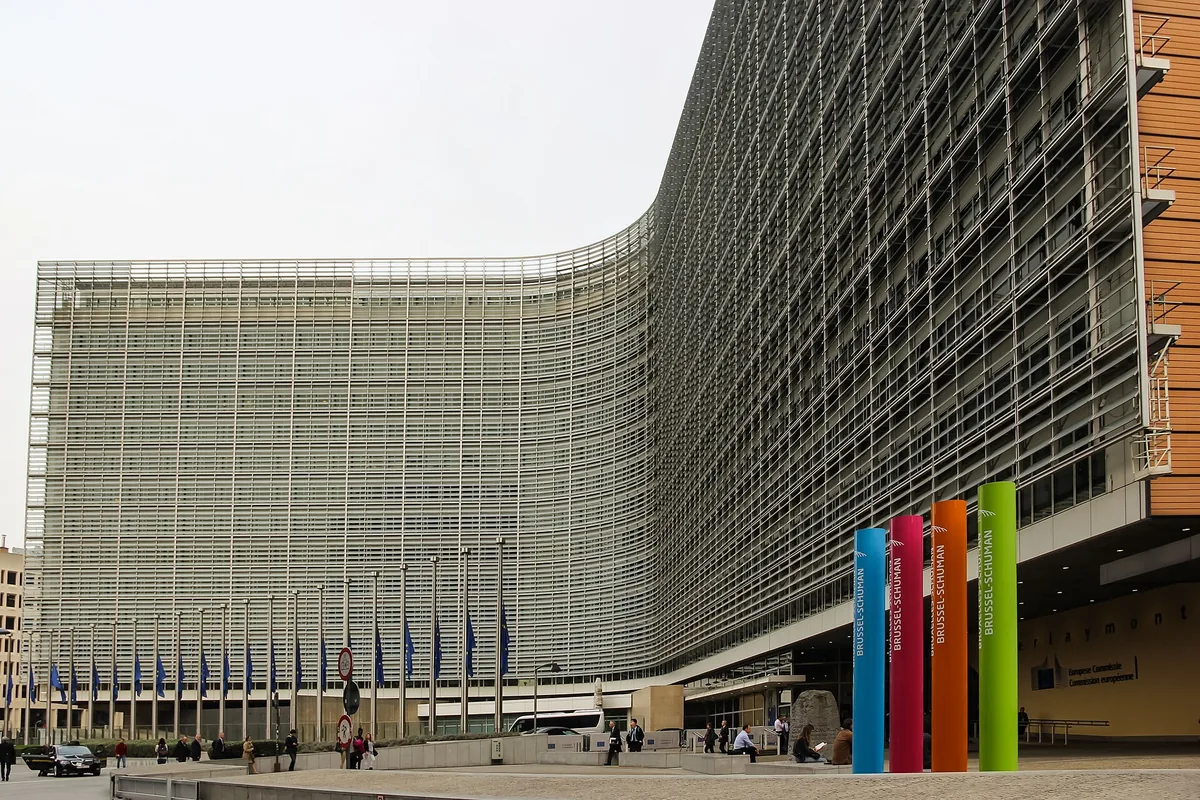
The European Commission adopted its DigitalJustice@2030 strategy to speed up the digitalisation of national justice systems and make them more modern and resilient. Digital technology and the deployment of artificial intelligence should help courts deliver faster and more effective justice.
Proposed by the European Commission on 19 November 2025 to simplify the implementation of the regulation on artificial intelligence, the AI omnibus was the subject of a political agreement on 7 May 2026 before entering into force on 27 July 2026. It postpones to 2 December 2027 the rules for high-risk systems in sensitive areas, strengthens the AI Office and adds a ban on “nudification” applications.
CCBE guide on the use of generative artificial intelligence by lawyers
Council of Bars and Law Societies of Europe (CCBE)
The Council of Bars and Law Societies of Europe published a guide on the use of generative artificial intelligence by lawyers. Intended for lawyers, law firms and bars, it helps them reconcile these tools with professional secrecy, the duty of competence and transparency towards clients.
Grenoble Bar · Grenoble Alpes University law faculty
Saint-Martin-d’Hères (law faculty)
The Grenoble Bar and the law faculty of Grenoble Alpes University organised three days devoted to artificial intelligence in the service of the law. The programme announced a series of talks by French and international speakers, a centre for testing AI tools open throughout and a legaltech forum, for legal professionals, students and judges.
EU AI Act: general-purpose AI models and governance
European Union
The governance rules of the European regulation on artificial intelligence became applicable, together with the obligations of providers of general-purpose AI models, notably on transparency and copyright. In July the Commission had published guidelines on these obligations, a voluntary code of practice and a template summary of training data.
Three AI modules in EDARA’s 2026-2027 initial training
Rhône-Alpes lawyers’ school (EDARA)
Lyon
The board of the Rhône-Alpes lawyers’ school adopted the programme of its 2026-2027 initial training, which opened in January 2026. Trainee lawyers take three courses on artificial intelligence: its legal and ethical boundaries, a workshop on its strengths and limits, then an online module on generative AI in professional practice. Digital security for law firms is also on the programme.
Report on AI in the service of justice handed to the Minister of Justice
French Ministry of Justice
The Minister of Justice received the report of the working group on artificial intelligence in the service of justice, which brought together some twenty experts and representatives of every profession within the ministry. It proposes a pragmatic action plan so that judges and staff can quickly benefit from AI, within a controlled framework.
As phishing attacks against bars become more frequent, the Conférence des bâtonniers circulated an awareness sheet. It explains how these frauds impersonate a trusted third party and gives five steps for recognising a fraudulent email, to strengthen the vigilance of all legal professionals.
CNB progress review on AI and guide to choosing tools
National Bar Council (CNB)
The general assembly of the National Bar Council reviewed the actions carried out since March 2024 by its working group on artificial intelligence. It presented a new guide, drawn from hearings of market players, offering an analysis grid for choosing legal AI tools against criteria such as data security, features, ethical compliance or cost.
Young lawyers’ motions on artificial intelligence at the Bordeaux congress
National Federation of Young Lawyers’ Unions (FNUJA)
Bordeaux
FNUJA, the federation of young lawyers’ unions, adopted two motions on artificial intelligence at its Bordeaux congress. One clarifies the scope of legal advice in the face of these tools and recalls the lawyer’s human responsibility. The other calls for the status of associate lawyers to be revalued, with and through AI.
Report “Court of Cassation and artificial intelligence: preparing the Court of tomorrow”
Court of Cassation
The Court of Cassation’s working group on artificial intelligence submitted its report to the First President and the Prosecutor General. After hearing some twenty people, it identifies possible uses of AI at the Court, assesses them against ethical, legal and functional criteria, then recommends a methodical, ethical and pragmatic approach. It also called for the Court to be given an ethical framework.
Council of Bars and Law Societies of Europe (CCBE)
The Council of Bars and Law Societies of Europe updated its 2012 guidelines on the use of cloud computing by bars and lawyers. The text sets out the risks of these services, including foreign laws applying to data stored outside the European Economic Area. It recalls the requirements of professional secrecy, then advises knowing one’s provider well, as well as where and how data is processed.
First rules of the EU AI Act: prohibitions and AI literacy
European Union
The first rules of the European regulation on artificial intelligence came into application: eight practices deemed unacceptable, including social scoring and harmful AI-based manipulation, are now prohibited. Providers and deployers of AI systems, which includes law firms that use them in their practice, must also take measures to develop the AI literacy of their staff.
Report it to propositions@souverainete-avocats.fr with the address of its organiser’s page: it will appear here once checked. You can also propose your own actions in the consultation, then sign the open letter.